



You can have an outstanding SaaS product, a beautifully designed website, and a steady stream of traffic – but if visitors don’t trust your business, they’re unlikely to convert.
Whether your goal is to generate demo bookings, encourage free trial sign-ups, or close enterprise deals, trust is one of the biggest factors influencing purchase decisions.
This is where social proof becomes a powerful conversion rate optimisation (CRO) strategy.
People naturally look to others before making decisions, especially when evaluating software they may rely on every day. When potential customers see evidence that others have successfully used and benefited from your product, uncertainty decreases and confidence grows.
In our previous guide on Conversion Rate Optimisation Principles, we briefly discussed building trust with social proof. In this article, we’ll explore why social proof works and examine twelve trust signals every SaaS company should consider implementing.
What Is Social Proof?
Social proof is the psychological principle that people tend to follow the actions and decisions of others, particularly when they’re uncertain.
For SaaS businesses, social proof demonstrates that real customers trust your product and have achieved measurable success using it.
Instead of simply telling visitors your software is effective, social proof allows existing customers to validate those claims.
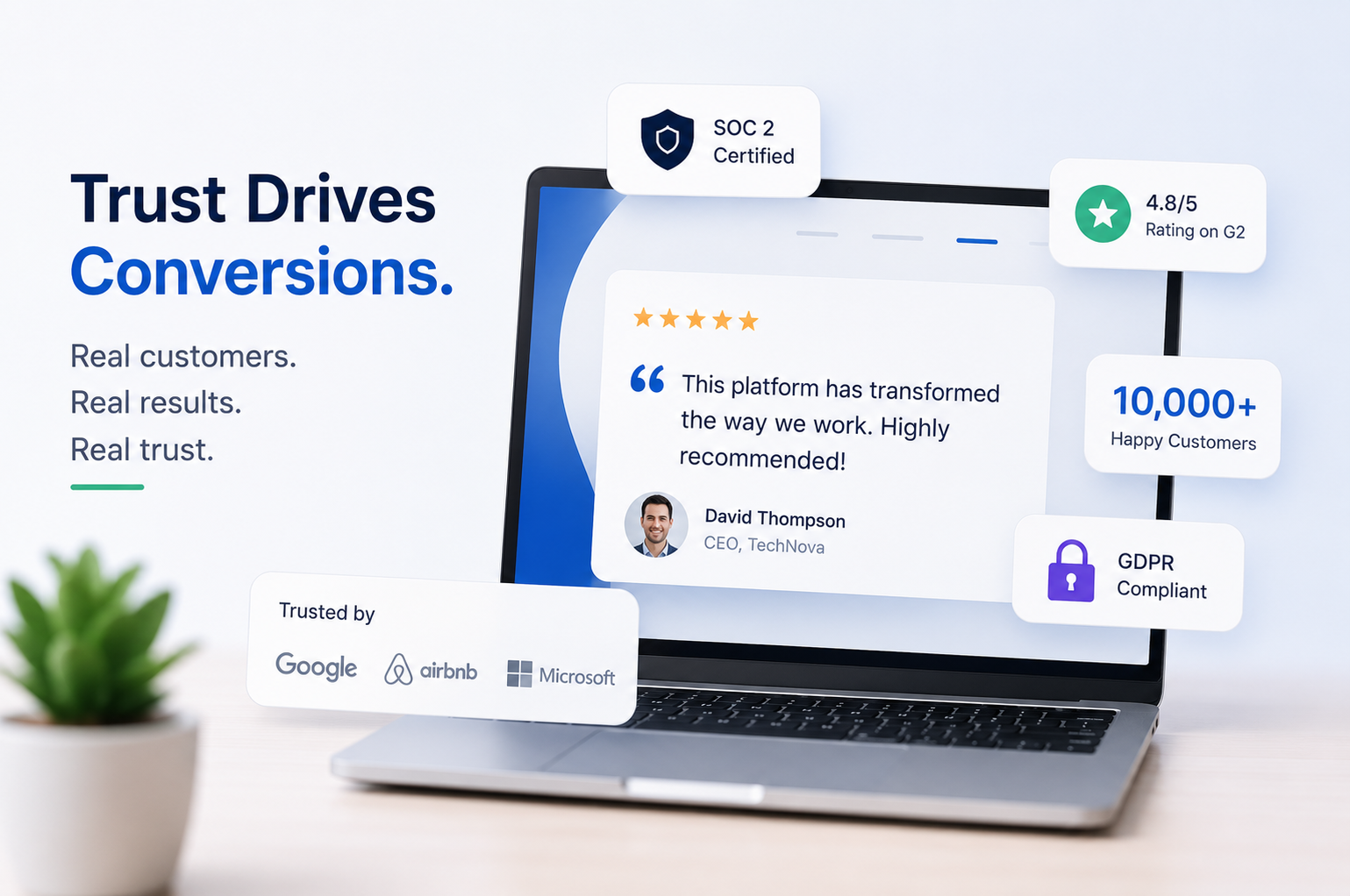
The result is increased credibility, reduced perceived risk, and higher conversion rates.
Unlike impulse purchases, SaaS buying decisions often involve research, comparison, internal approvals, and financial commitments.
Potential customers ask themselves questions such as:
- Can I trust this company?
- Will this software solve my problem?
- Are businesses similar to mine already using it?
- Is the investment worth the cost?
Strong social proof answers these questions before your sales team ever gets involved.
When visitors feel confident, they’re significantly more likely to take the next step.
12 Trust Signals That Improves Social Proof On Your Website
It’s important to understand that not all trust signals have the same impact.
The most effective ones directly address your prospects’ concerns, reduce perceived risk, and reinforce confidence at different stages of the buyer journey. The following twelve trust signals have consistently proven effective for SaaS companies because they combine credibility with relevance, helping visitors feel confident enough to take the next step – whether that’s starting a free trial, booking a demo, or becoming a paying customer.
1. Customer Testimonials
Customer testimonials are one of the most influential trust signals because they allow your customers – not your marketing team – to communicate the value of your product.
When prospective buyers evaluate SaaS solutions, they naturally look for reassurance from businesses that have already solved similar problems. A well-crafted testimonial reduces uncertainty, answers common objections, and provides confidence that your software can deliver measurable results.
However, not all testimonials are equally effective.
What Makes a Great SaaS Testimonial?
The most persuasive testimonials answer three important questions:
- Who achieved the result?
- What problem were they trying to solve?
- What measurable outcome did they achieve?
- And most importantly – Do I relate with such customer testimonials?
Whenever possible, include:
- Customer’s full name
- Job title
- Company name
- Company logo
- Customer photo (optional but recommended)
- Specific business challenge
- Quantifiable results
- Timeframe in which results were achieved
Here is an example testimonial which contains all the trust elements mentioned above
“After implementing HubSpot CRM, our sales team reduced lead response time by 45% and increased qualified demo bookings by 28% within four months.”
Sarah Johnson
Head of Sales, TechNova Solutions
This type of testimonial is believable because it contains real business outcomes rather than vague praise.
Best Practices for Customer Testimonials
To maximise their impact, follow these best practices:
- Focus on measurable business outcomes instead of generic compliments.
- Use testimonials from customers who closely match your target audience.
- Include names, job titles, and company information whenever permission is granted.
- Display customer logos alongside testimonials to reinforce credibility.
- Keep testimonials concise – typically between 50 and 120 words.
- Update testimonials regularly to ensure they reflect your current product.
- Whenever possible, collect testimonials immediately after customers achieve a successful milestone or they have given you a positive response after using your product and services.
Examples of SaaS Companies That Use Testimonials Effectively
Many successful SaaS companies prominently feature customer success stories throughout their websites. Given below are some examples for your understanding of what makes a great testimonial that adds significant social proof to your business
Slack highlights how companies improved communication and team productivity through detailed customer stories. Here is an example customer story that re-inforces Slack’s offering with a credible, original and strong testimonial
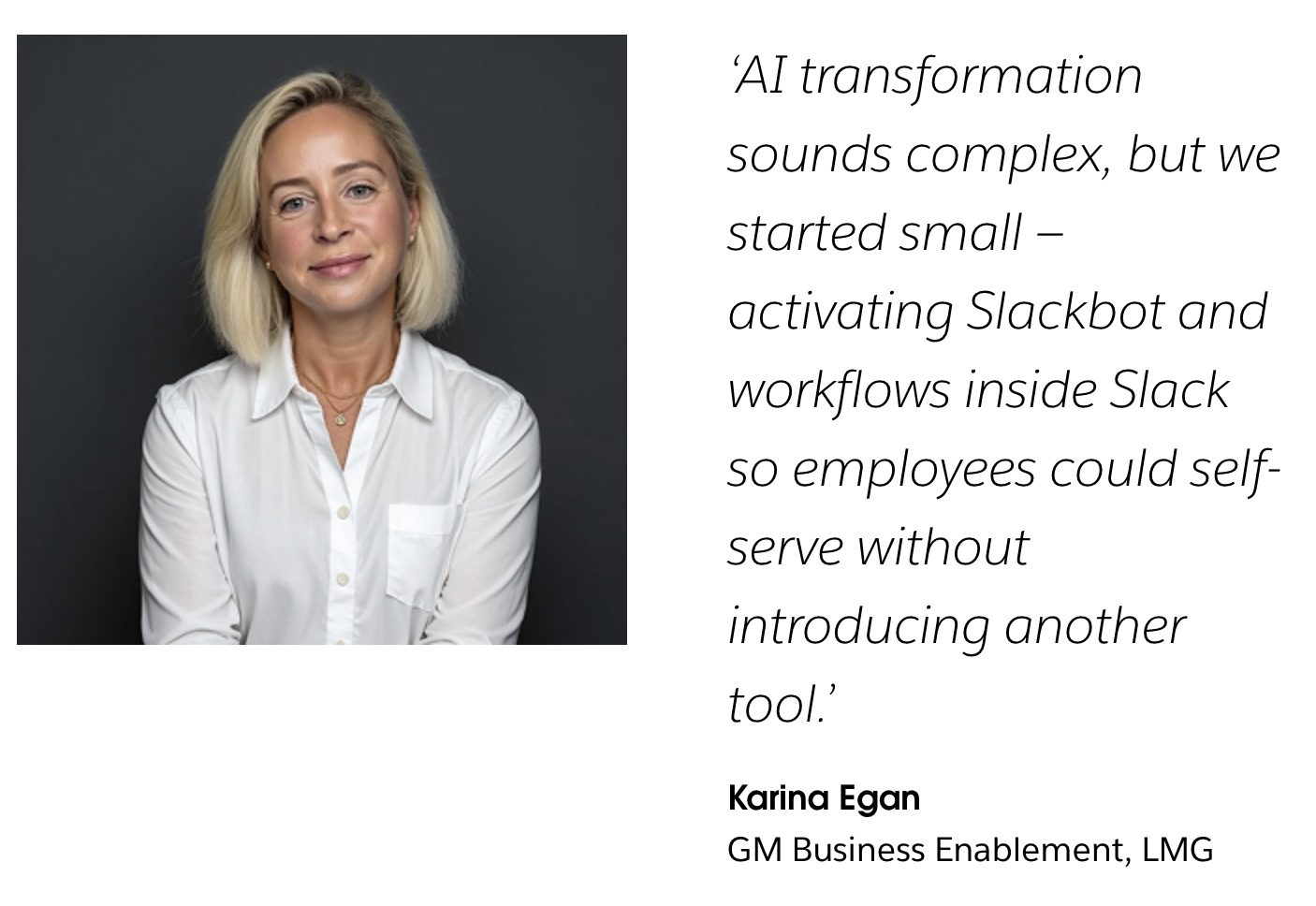
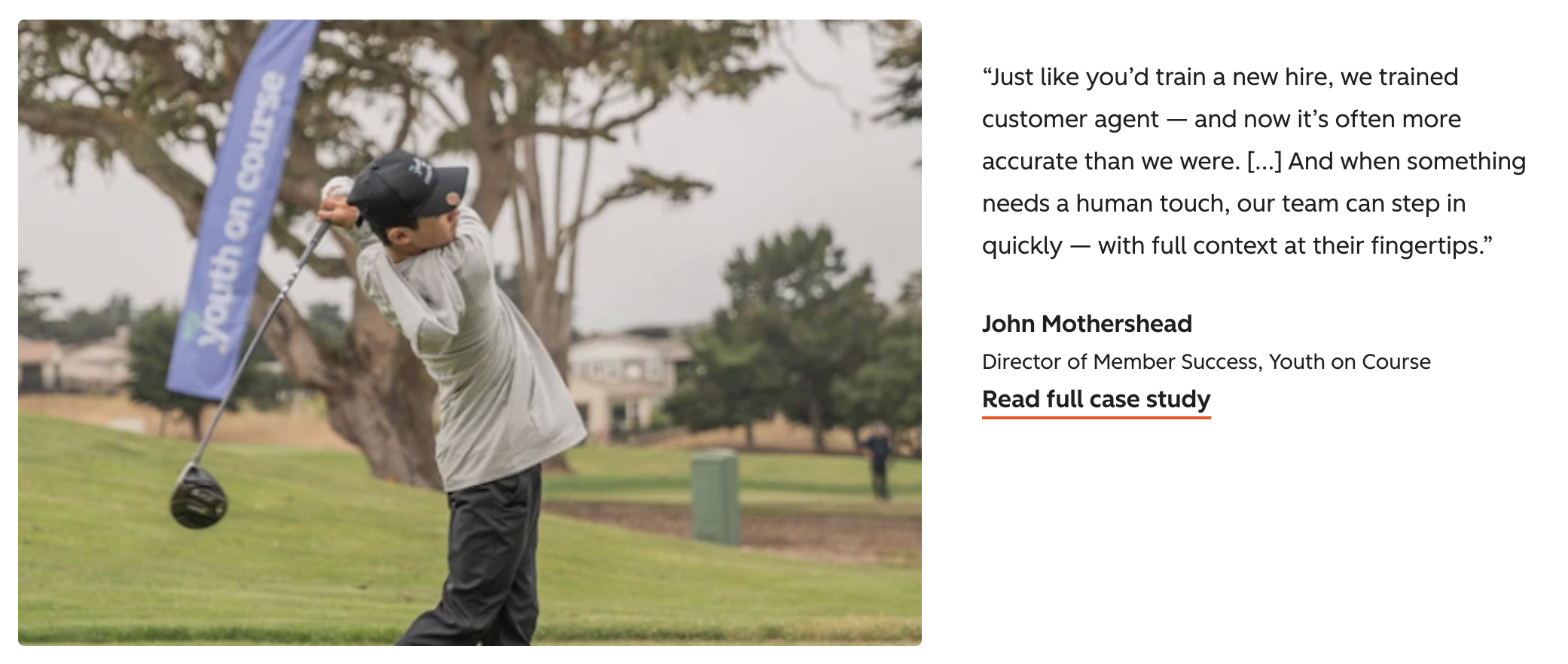
HubSpot combines customer testimonials with measurable marketing and sales results to demonstrate business impact.
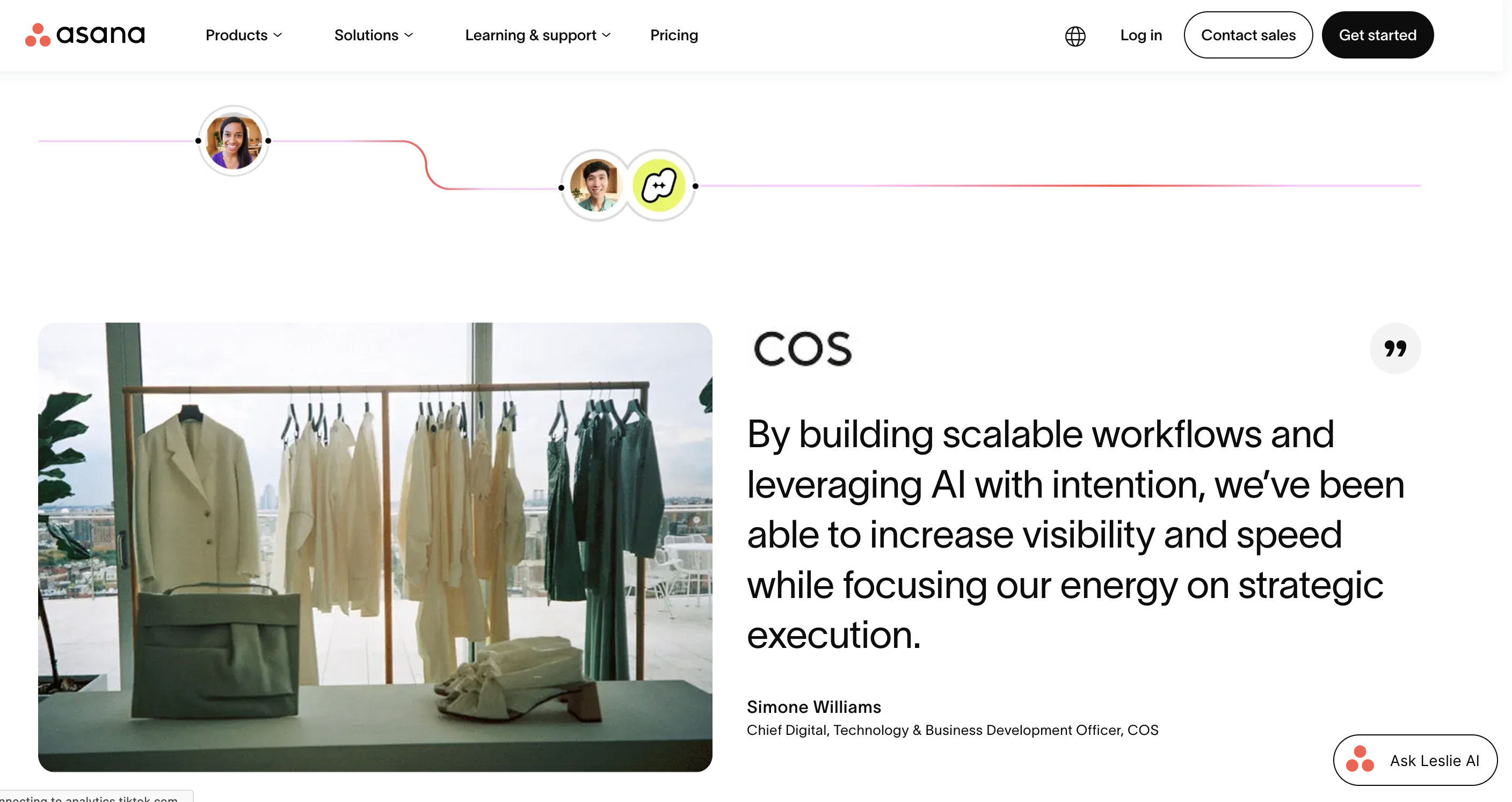
Asana showcases case studies explaining how organisations streamline project management and improve collaboration.
Where Should Testimonials Be Displayed?
Testimonials are most effective when placed at key decision points throughout the buyer journey.
Consider displaying them:
- On your homepage
- Above or below primary Call-to-Action (CTA) buttons
- On product and feature pages
- Near pricing tables
- On landing pages
- Beside demo request forms
- On checkout or subscription pages
Strategically placing testimonials where visitors are making decisions can significantly increase conversion rates.
Pro Tip
Whenever possible, supplement written testimonials with short video testimonials. Seeing and hearing real customers discuss their experience creates an additional layer of authenticity that’s difficult to replicate with text alone, making video one of the strongest forms of social proof for SaaS businesses.
2. Detailed Case Studies
While testimonials provide a snapshot of customer satisfaction, case studies tell the complete story. They show prospective customers exactly how your SaaS product helped solve a real business problem, making them one of the most persuasive forms of social proof.
For many B2B SaaS buyers, purchasing software is rarely an impulsive decision. They want evidence that your solution has worked for businesses facing similar challenges. A well-written case study provides that evidence by demonstrating the journey from problem to measurable success.
Rather than simply saying your software works, a case study shows how it works, why it worked, and what results it delivered.
Why Case Studies Build More Trust
Decision makers don’t just want promises and blanket statements. They want proof.
A detailed case study helps answer questions such as:
- Has this software solved a similar problem before?
- What kind of company benefited from it?
- How difficult was the implementation?
- What measurable results were achieved?
- How long did it take to see success?
By addressing these questions, case studies reduce uncertainty and help prospects visualise how your solution could fit into their own business.
What should be included in the Case study of a Saas Business
An effective case study should follow a logical narrative that’s easy to understand and backed by real outcomes. Given below is a structure of a Case study and what elements it should contain to create a good impression and look conclusive to readers
- Customer Introduction: Briefly introduce the customer by including Company name, Industry, Business size, Target market. This helps readers quickly determine whether the customer is similar to their own organisation.
- The Challenge: Describe the business problem before your product was introduced. The more relatable the challenge, the stronger the connection with potential buyers.
- The Solution: Explain how your SaaS platform addressed the customer’s pain points. Focus on – Key features used, Implementation process, Timeline, Team involvement, Any integrations or onboarding support.
- Results: This is the most important part of the case study. Whenever possible, include quantifiable outcomes. For example – “Reduced onboarding time by 50%” or “Reduced operational costs by 22%” etc.
Best Practices for High Converting Case Studies
To maximise credibility and engagement:
- Focus on one customer’s success story per case study.
- Include real numbers and measurable business outcomes.
- Use charts, screenshots, or before and after comparisons where relevant.
- Add customer quotes throughout the article instead of only at the end.
- Keep the story concise and easy to scan using clear headings.
- Include the customer’s logo and branding (with permission).
- End with a clear summary of the business impact achieved.
The goal isn’t to create a sales brochure it’s to provide an authentic success story that prospects can relate to.
Here is an example case study from Salesforce.
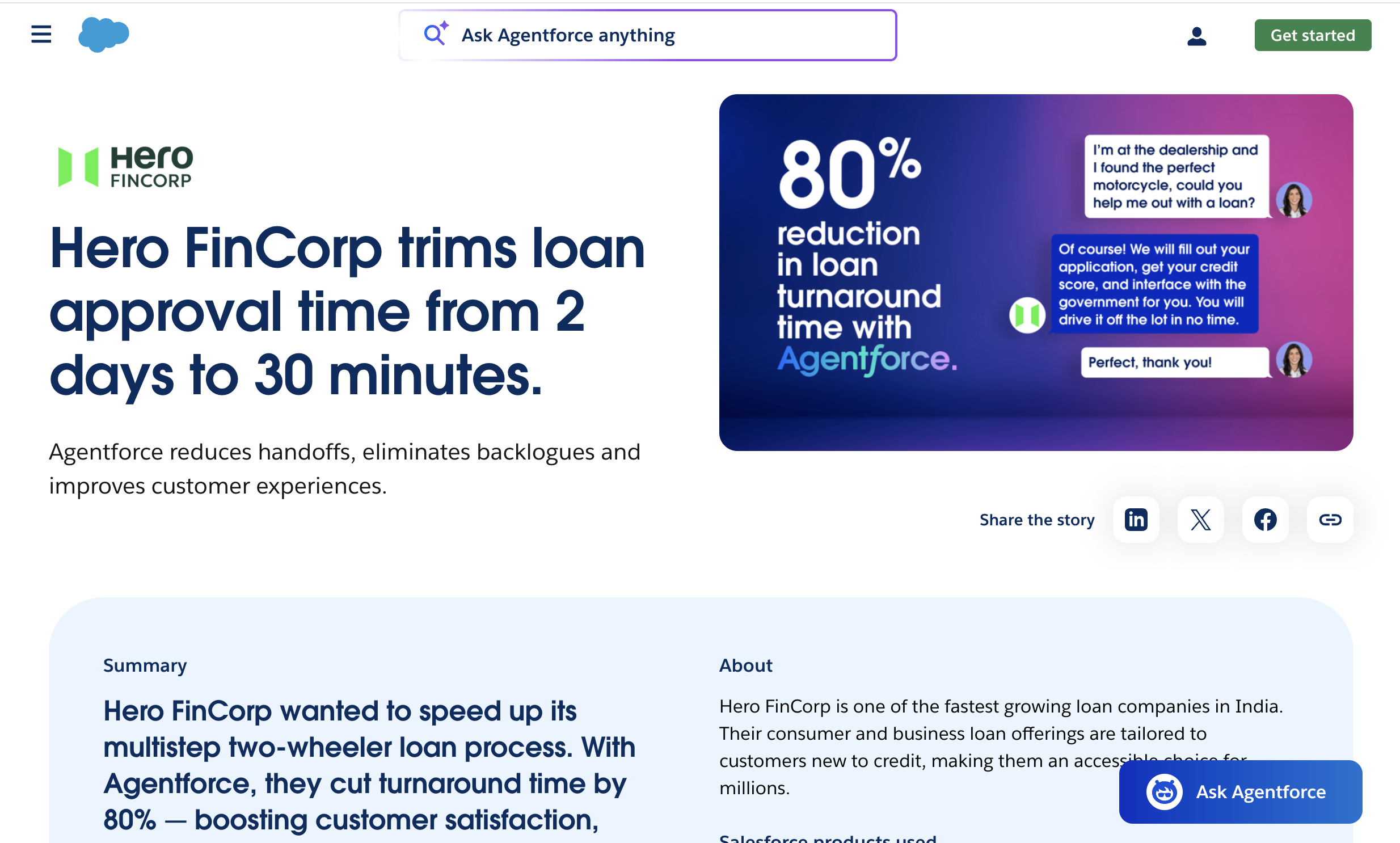
You can see how intelligently Salesforce has used all the elements in the case study
- A brief summary of the case study is provided at the very top to communicate what the business problem is all about
- In the hero section a “Top stat” is given to quickly create engagement on one key result that was achieved.
- The Top stat is complimented with a mini customer testimonial which is positioned as a conversation.
- About the company is clearly mentioned at the top to give readers an understanding on the target customer and their company profile
- A results card section is showing focussing on the top 4 key results.
- This is followed by the “Challenge” section which outlines in detail the business challenge that Salesforce helped solve.
- In the middle, Salesforce has intelligently embedded Testimonials from different segments to re-inforce value addition and how each user persona derived value from the solution and their individual opinions and experiences.
Pro Tip
Create case studies for different customer segments, industries, and company sizes rather than relying on a handful of generic success stories.
A healthcare provider, an e-commerce business, and a SaaS startup often have very different priorities. When prospects can see success stories from organisations similar to their own, they’re much more likely to trust your solution and take the next step.
3. Recognizable Client Logos
Sometimes, trust is established before a visitor reads a single word on your website.
A well placed row of recognisable client logos can instantly reassure potential customers that reputable businesses already trust your product. This form of social proof works because people naturally associate established brands with credibility. If respected companies are using your SaaS solution, new prospects are more likely to believe it’s reliable and worth considering.
While client logos don’t provide detailed success stories like testimonials or case studies, they create an immediate positive impression and reduce the perceived risk of trying your product.
Why Client Logos Are So Effective
Visitors often make subconscious trust decisions within the first few seconds of landing on a website.
Seeing familiar company logos can quickly answer questions such as:
- Is this software already being used by established businesses?
- Can this company be trusted?
- Is the product mature enough for organisations like mine?
- Am I taking a risk by choosing this solution?
Even if prospects don’t recognise every logo, seeing a collection of businesses across different industries suggests that your product has broad market acceptance.
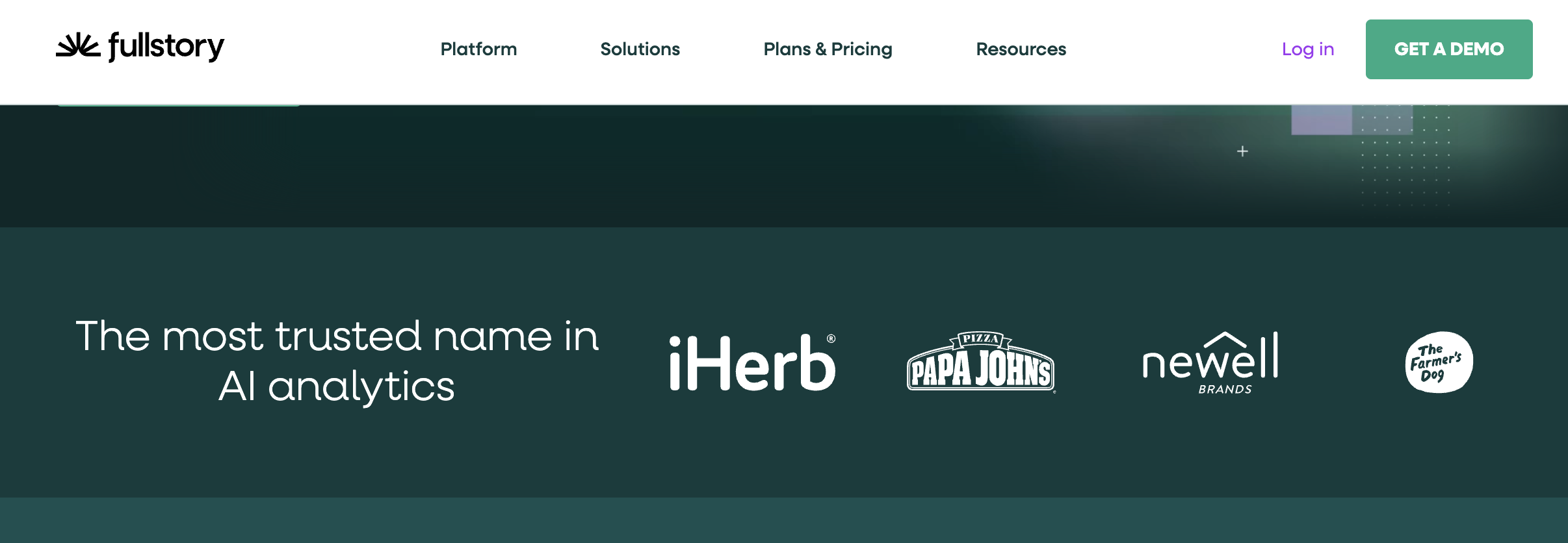
Below is an example of how to use customer or client logos to instill trust and add social proof to your website. Fullstory.com uses a minimalist list of 4 client logos on it’s homepage to show reputed companies who use FullStory as their analytics platform
Best Practices for Displaying Client and Customer Logos
Simply adding logos to your homepage isn’t enough. Their presentation should reinforce credibility without overwhelming the page.
Follow these best practices:
- Display only genuine customers who have given permission to use their logo.
- Showcase companies that closely match your target audience or industry.
- Use high-quality monochrome or consistent-colour logos to maintain a clean design.
- Organise logos in neat rows with equal spacing rather than cluttering the page.
- Keep the number of logos manageable—quality is often more persuasive than quantity.
- Regularly update your logo section to include recent customers and remove outdated ones.
Avoid exaggerating your customer base by displaying logos of companies that only signed up for a trial or had minimal interaction with your product. Authenticity is essential for maintaining trust.
4. Ratings and Reviews
While testimonials and case studies are created with your involvement, ratings and reviews offer something equally valuable – independent validation from your customers.
When potential buyers research products and services, they rarely rely solely on what a company says about themselves. Instead, they read customer reviews, and evaluate real user experiences before making a decision.
Positive ratings on trusted review platforms reassure prospects that your product delivers on its promises, while detailed reviews provide the unbiased insights they need to move forward with confidence.
For many buyers, especially those evaluating multiple vendors, third party reviews can be the deciding factor between booking a demo with your company or choosing a competitor.
Ratings and reviews on the right platforms help answer questions such as:
- Is the product or service reliable?
- How easy is it to use?
- What do existing customers like most?
- Are there any recurring issues?
- Would current customers recommend it?
Unlike marketing copy, customer reviews are generally perceived as objective, making them one of the strongest forms of social proof available.
Some of the most influential SaaS review platforms include:
- G2 – One of the largest software review platforms, widely used by B2B buyers to compare products across hundreds of categories.
- Capterra – Popular among businesses looking for software solutions, offering ratings, reviews, pricing comparisons, and feature evaluations.
- Trustpilot – Known for detailed, in depth customer reviews that help enterprise buyers make informed purchasing decisions.
- Gartner Peer Insights – Trusted by enterprise organisations seeking verified reviews from IT professionals and decision-makers.
- Google Reviews – Particularly valuable for SaaS companies that also provide implementation, consulting, or managed services, as they improve both credibility and local search visibility.
Best Practices for Collecting Reviews
The best reviews don’t happen by accident – they’re the result of high quality products and services, happy customers and a consistent customer feedback process.
To encourage high quality reviews:
- Ask customers for feedback after they’ve achieved a successful outcome, such as completing onboarding or reaching a key milestone.
- Make the review process as simple as possible by sharing direct links to your preferred review platform.
- Encourage honest, detailed feedback rather than requesting only five star reviews.
- Respond professionally to both positive and negative reviews to demonstrate that you value customer feedback.
- Regularly monitor review platforms and address recurring issues highlighted by customers.
Most importantly, never purchase fake reviews or pressure customers into leaving overly positive feedback. Authenticity builds trust, while manipulated reviews can quickly damage your reputation.
5. Founder and Team Credibility
People buy from people.
When evaluating products and services, especially from newer or lesser known companies, prospects want to know who they’re doing business with. A transparent founder story, an experienced leadership team, and visible subject matter experts can significantly increase trust by showing that real people with relevant expertise stand behind the product.
Introduce your leadership team by highlighting:
- Industry experience
- Previous companies
- Professional achievements
- Speaking engagements
- Certifications
A transparent company appears more trustworthy than an anonymous one.
Introducing the people behind your business helps answer important questions and creates a personal connection that logos and feature lists simply can’t achieve.
Visitors often have questions such as:
- Who built this product?
- Do they understand my industry?
- Can I trust this company with my business data?
- Is there real expertise behind the platform?
- Will this company continue to innovate and support its customers?
Showcase Expertise, Not Just Job Titles
An “About Us” page with names and titles isn’t enough. Your team should demonstrate why they’re qualified to solve your customers’ problems.
Highlight:
- Industry experience and years of expertise
- Previous companies or notable roles
- Relevant certifications or qualifications
- Speaking engagements at industry conferences
- Published articles or research
- Awards and professional recognition
- Contributions to open-source projects or industry communities
For example, a cybersecurity company gains more credibility when its founders have backgrounds in information security or have previously worked for respected technology firms. Similarly, a healthcare platform inspires greater confidence when its leadership team includes professionals with experience in healthcare or regulatory compliance.
Your founder and leadership team should be visible, but they shouldn’t overshadow your customers. Use founder credibility to establish expertise and company vision, then reinforce that trust with customer testimonials, case studies, ratings, and measurable success stories.
Visitors Convert When they “Trust” your Business
Visitors rarely convert because a company claims to have the best product or service.
They convert because other customers have already demonstrated success and that the brand and the company feels “trustworthy”
Effective social proof reduces uncertainty, builds credibility, and gives prospects the confidence to move forward.
Whether you’re a startup or an established company, implementing strong trust signals across your website can significantly improve your conversion rates without increasing your marketing budget.
If you’re serious about Conversion Rate Optimisation, investing in authentic social proof is one of the highest return improvements you can make.
