



Website speed is often the first thing people think about when evaluating website performance.
While page load time is important, it’s only one part of the bigger picture. A website can appear to load quickly yet still suffer from issues such as poor Core Web Vitals, inefficient code, server bottlenecks, unoptimised images, or third-party scripts that negatively affect page speed and user experience.
This is where a Website Performance Audit comes in.
Rather than simply measuring how fast a webpage loads, a website performance audit provides a complete assessment of the technical, infrastructure, and user experience factors that influence how your website performs. It examines everything from server response times and front-end resources to mobile performance, caching, and Core Web Vitals, helping uncover issues that may not be immediately obvious to the naked eye.
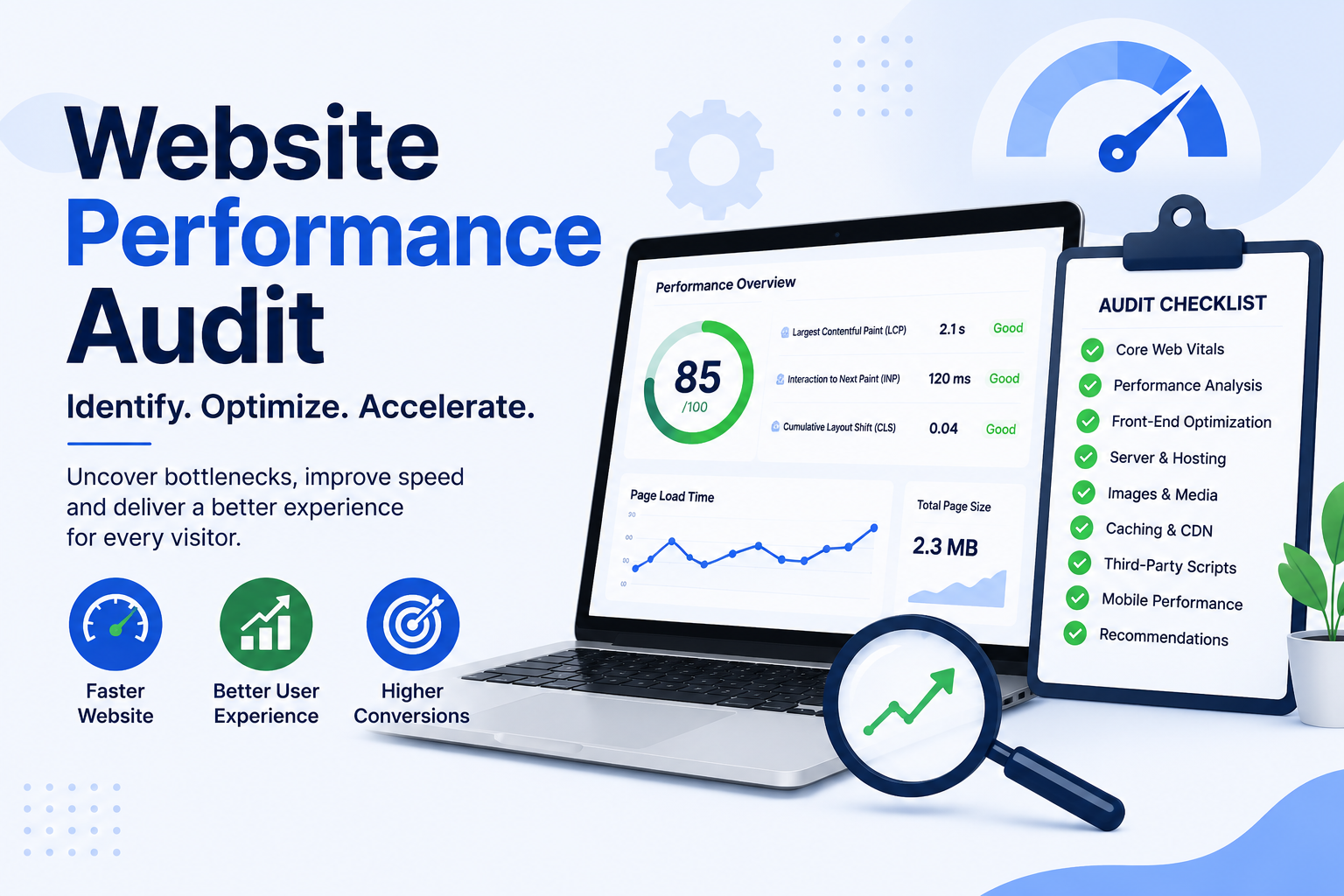
What Is a Website Performance Audit?
A Website Performance Audit is a complete evaluation of your website’s technical performance, user experience, and underlying infrastructure. Its purpose is to identify the factors that affect how quickly, efficiently, and reliably your website loads and functions across different devices and browsers.
Unlike a basic speed test that provides a performance score, a Website Performance Audit takes a deeper look at the underlying causes of performance issues. It examines multiple aspects of your website, including Core Web Vitals, server response times, front-end code, images, caching, third-party scripts, mobile responsiveness, and other technical components that influence the overall user experience.
Primary Objectives of a Website Performance Audit
A Website Performance Audit is designed to achieve several key objectives:
- Identify Technical Bottlenecks: Identify technical bottlenecks that is slowing down your website.
- Find User Experience Issues: Uncover issues affecting user experience across desktop and mobile devices.
- Ensure Efficient use of resources: Evaluate how efficiently your website’s resources are delivered and rendered.
- Prioritisation – Prioritise optimisation opportunities based on their potential impact.
- Optimisation Roadmap – Provide a clear roadmap for improving website performance over time.
Rather than simply highlighting problems, a professional website performance audit helps you understand which improvements should be addressed first to achieve the best results.
Measuring Website Performance vs Improving Website Performance
One of the most common misconceptions is that running an online speed test is the same as performing a Website Performance Audit.
Performance testing tools such as Google PageSpeed Insights, GTmetrix, or Lighthouse are excellent for measuring website performance. They generate scores, report metrics, and flag potential issues. However, they don’t always explain why those issues exist or which ones should be prioritised.
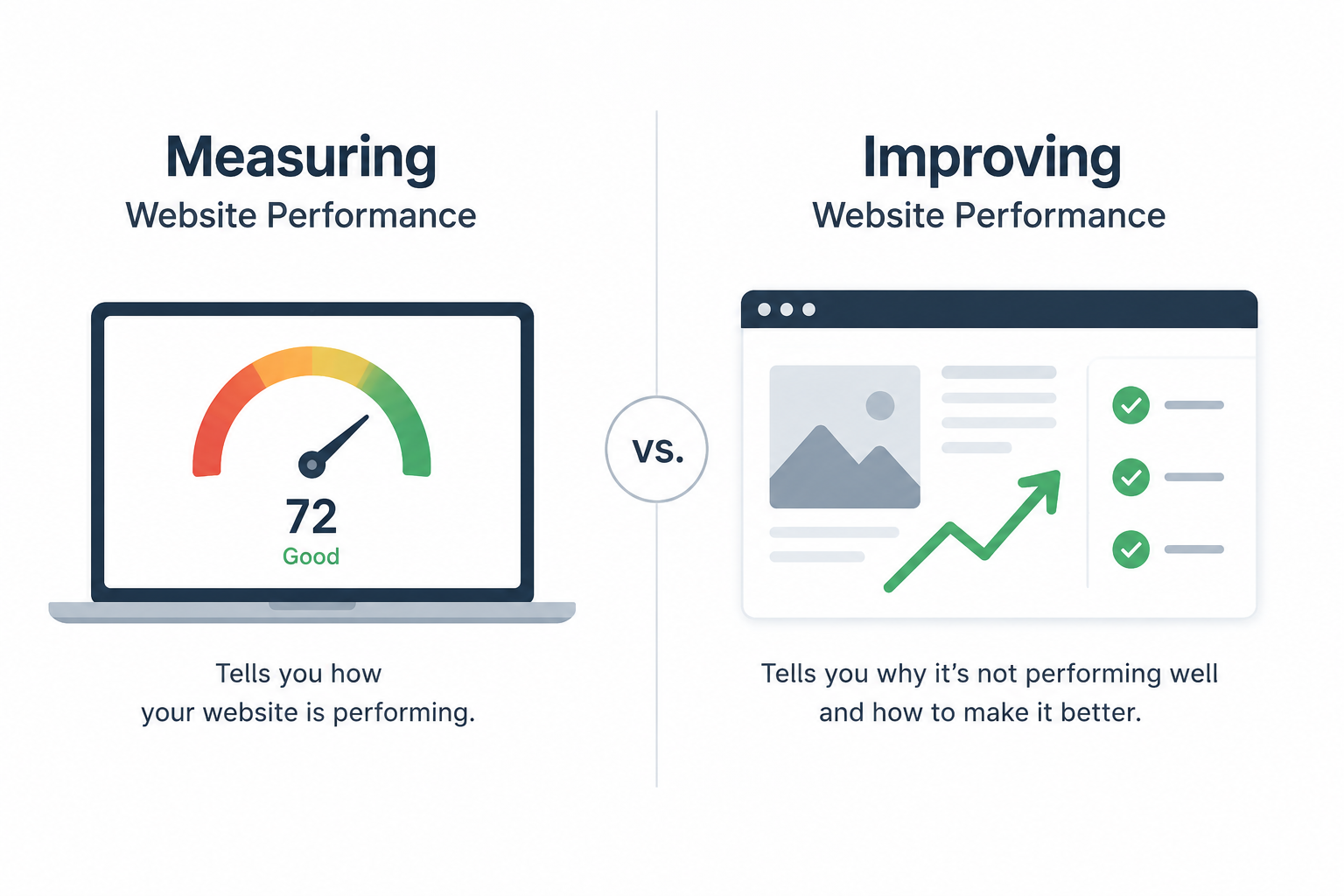
A website performance audit goes a step further by analysing the root causes behind the results.
Instead of presenting a list of recommendations, it evaluates your website’s architecture, code, hosting environment, and resource delivery to determine what’s actually limiting performance. The outcome is a prioritised action plan that focuses on meaningful improvements rather than simply increasing a performance score.
Think of it this way: a speed testing tool tells you what is happening, while a Website Performance Audit helps you understand why it’s happening and how to fix it effectively.
Why You Should Invest in a Website Performance Audit
Many businesses don’t actively think about website performance until something starts going wrong.
A website that was once fast and responsive can gradually become slower as new features, plugins, third-party integrations, and content are added over time.
In some specific situations performance issues becomes apparent after a website redesign, platform migration, or a decline in key business metrics.
Here are some of the most common reasons organisations choose to invest in a Website Performance Audit.
-
The Website “Feels” Slow – One of the most obvious signs is when pages take longer than expected to load or users begin reporting that the website feels sluggish.
-
Core Web Vital Scores Have Declined – Google’s Core Web Vitals provide valuable insights into the real-world user experience of your website. If metrics such as Largest Contentful Paint (LCP), Interaction to Next Paint (INP), or Cumulative Layout Shift (CLS) begin to deteriorate, it often indicates underlying technical issues that should be investigated before they affect both users and search performance.
- Organic Traffic Has Dropped: A decline in organic traffic can occur for many reasons, but website performance could sometimes be one of the indirect contributing factors towards that outcome. Slow-loading pages, poor mobile performance, or unresolved technical issues can negatively affect search rankings and user experience.A performance audit helps determine whether technical performance is playing a role in the organic traffic decline.
- Conversion Rates Have Decreased – If fewer visitors are completing desired actions such as making a purchase, submitting a contact form, or requesting a demo, performance issues could be creating unnecessary friction in the user journey. Even small delays in page loading or interactive elements can discourage users from completing conversions.
- Preparing Before a Website Redesign or Migration – Conducting a Website Performance Audit before a redesign, platform migration, or hosting change establishes a performance baseline and helps identify existing issues that shouldn’t be carried over into the new environment.
- Launching a Product or a High Traffic Marketing Campaign – Launching a new product, running paid advertising campaigns, or promoting seasonal offers can generate significant increases in website traffic. A website performance audit helps determine whether your website is capable of handling higher visitor volumes without compromising speed, reliability, or user experience.
- Scaling an Ecommerce Website: As ecommerce websites grow, so do the demands placed on their infrastructure. Larger product catalogues, increased customer traffic, additional integrations, and more complex checkout processes can all impact performance. Regular audits help identify bottlenecks before they begin affecting sales and customer satisfaction.
- Maintaining Long Term Website Health: Website performance isn’t something that should only be reviewed when problems arise. As websites evolve through content updates, plugin installations, software upgrades, and new functionality, performance can gradually decline over time. Regular Website Performance Audits help businesses monitor these changes, identify emerging issues early, and ensure their website continues to deliver a fast, reliable, and consistent experience.
Ultimately, a Website Performance Audit is about being proactive rather than reactive.
Instead of waiting for users to complain or business metrics to decline, an audit provides the insights needed to identify performance issues early and prioritise the improvements that will deliver the greatest impact.
Who Should Consider a Website Performance Audit?
A Website Performance Audit can benefit any organisation that relies on its website to generate leads, sales, or customer engagement.
It’s particularly valuable for:
- Businesses experiencing slow website performance or declining user engagement.
- Ecommerce websites looking to improve shopping experiences and reduce cart abandonment.
- SaaS companies that depend on fast, reliable web applications.
- Marketing teams aiming to maximise the return on their Google Adwords or PPC campaigns.
- Organisations preparing for a website redesign, platform migration, or major product launch.
- Website owners who want to proactively identify and resolve performance issues before they affect users.
Whether your website serves a few hundred visitors a month or thousands every day, regular performance audits help ensure it continues to deliver a fast, reliable, and seamless experience.
What Does a Website Performance Audit Include?
A professional Website Performance Audit examines every aspect of your website that can influence its speed, responsiveness, stability, and overall user experience.
While the exact scope may vary depending on the website and business requirements, most comprehensive audits include the following areas.
Performance overview
A Website Performance Audit starts by establishing a baseline of your website’s overall performance. This provides a snapshot of how your website currently performs and helps identify the areas that require further investigation.
A performance overview typically assesses:
- Overall page load times across key pages.
- Website performance on desktop and mobile devices.
- Server response times and page rendering speed.
- Page size and the number of requests required to load a page.
- High-level performance metrics from industry-standard testing tools.
- Performance trends to identify pages or sections that require further analysis.
This baseline provides the foundation for the rest of the audit and helps prioritise the areas that will deliver the greatest performance improvements.
Core Web Vitals Assessment
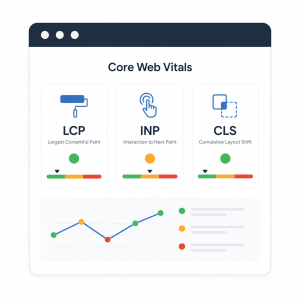 Core Web Vitals measure key aspects of the user experience, helping identify how quickly users can view, interact with, and navigate your website. A Website Performance Audit assesses these metrics and investigates the underlying causes of poor performance.
A Core Web Vitals assessment typically includes:
- Largest Contentful Paint (LCP) to measure loading performance.
- Interaction to Next Paint (INP) to evaluate responsiveness.
- Cumulative Layout Shift (CLS) to identify visual stability issues.
- Factors affecting Core Web Vitals, such as large images, render-blocking resources, or excessive JavaScript.
- Recommendations to improve user experience and Core Web Vitals scores.
Server & Web Hosting Performance
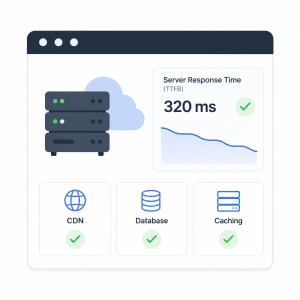 Your website’s hosting environment plays a significant role in overall performance. A Website Performance Audit evaluates whether your server and infrastructure can efficiently deliver content to users.
A server and hosting assessment typically includes:
- Server response times and Time to First Byte (TTFB).
- Hosting environment and server configuration.
- Database performance and query efficiency.
- Server-side caching configuration.
- Content Delivery Network (CDN) implementation, where applicable.
- Resource utilisation and potential infrastructure bottlenecks.
- Recommendations to improve server efficiency and scalability.
Front End Performance
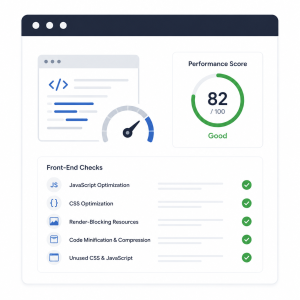 The front end of your website has a significant impact on how quickly pages load and become interactive. A Website Performance Audit reviews the code and resources delivered to the browser to identify opportunities for optimisation.
A front end performance assessment typically includes:
- CSS and JavaScript file optimisation.
- Render-blocking resources that delay page loading.
- Code minification and compression.
- Unused or redundant CSS and JavaScript.
- Browser rendering efficiency.
- Opportunities to improve page interactivity and loading performance.
Image Optimisation
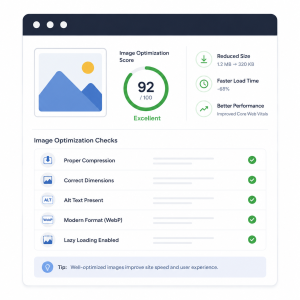 Images are often one of the largest contributors to slow-loading websites. A Website Performance Audit evaluates how images are delivered and identifies ways to reduce their impact on performance without compromising quality.
An image optimisation assessment typically includes:
- Oversized or uncompressed images.
- Appropriate image formats, such as WebP or AVIF.
- Responsive image implementation.
- Lazy loading configuration.
- Image dimensions and scaling.
- Opportunities to reduce overall page weight.
Caching & Content Delivery
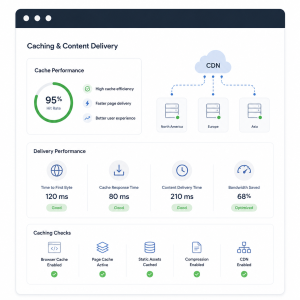 Caching helps reduce page load times by storing website resources closer to users or preventing unnecessary requests to the server. A Website Performance Audit evaluates whether caching is configured effectively.
A caching assessment typically includes:
- Browser caching configuration.
- Server-side caching.
- Page and object caching.
- Cache-control headers.
- Content Delivery Network (CDN) configuration and performance.
- Opportunities to improve resource delivery and reduce server load.
Third Party Scripts – Google Tag Manager, Google Analytics, Facebook etc.
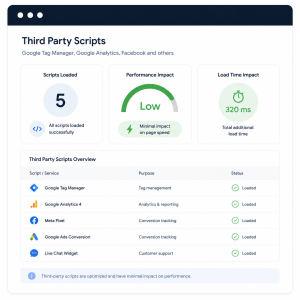 Many websites rely on third-party services for analytics, advertising, marketing, live chat, and social media integration. While these tools provide valuable functionality, they can also introduce significant performance overhead.
A third-party script assessment typically includes:
- Analytics and tracking scripts.
- Marketing and advertising tags.
- Social media widgets.
- Embedded videos and external content.
- Chat and customer support tools.
- Scripts that delay rendering or increase page load times.
- Opportunities to defer, remove, or optimise third-party resources.
Mobile Performance
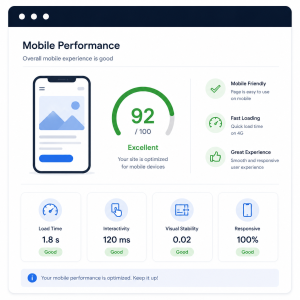 With most users now browsing on mobile devices, it’s essential that websites perform consistently across different screen sizes and network conditions. A Website Performance Audit evaluates how well your website performs on mobile.
A mobile performance assessment typically includes:
- Mobile page load times.
- Core Web Vitals on mobile devices.
- Responsive design performance.
- Touch interactions and usability.
- Mobile network optimisation.
- Device-specific performance bottlenecks.
- Opportunities to improve the mobile user experience.
Performance Recommendations & Optimisation Roadmap
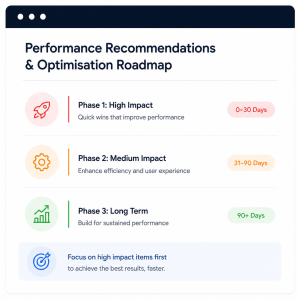 The final stage of a Website Performance Audit is turning the findings into a practical action plan. Rather than presenting a list of technical issues, the audit prioritises recommendations based on their potential impact and implementation effort.
An optimisation roadmap typically includes:
- A summary of identified performance issues.
- Root cause analysis for each issue.
- Prioritised recommendations based on business impact.
- Quick wins that can deliver immediate improvements.
- Longer-term optimisation opportunities.
- Guidance on implementation priorities and expected outcomes.
A clear optimisation roadmap helps businesses focus on the improvements that will deliver the greatest return, ensuring time and resources are invested where they’ll have the biggest impact.
Website Performance Audit vs Automated Performance Testing Tools
Tools such as Google PageSpeed Insights, Lighthouse, and GTmetrix are excellent for measuring website performance. They provide performance scores, report Core Web Vitals, and highlight areas that may require attention. These tools are often the first step in identifying potential performance issues.
However, an automated testing tool is only part of the picture. It reports what is happening, but it doesn’t always explain why those issues exist or which improvements will have the greatest impact on your website.
A Website Performance Audit builds on the insights provided by these tools by investigating the underlying causes of performance problems and translating technical findings into practical, prioritised recommendations.
| Performance Testing Tools | Website Performance Audit |
|---|---|
| Generate performance scores and technical metrics. | Investigates the root causes behind performance issues. |
| Highlight potential performance bottlenecks and warnings. | Identifies exactly what’s causing slowdowns across your website. |
| Provide generic recommendations that apply to most websites. | Delivers tailored recommendations based on your website’s architecture and business objectives. |
| Focus primarily on measurable performance metrics. | Evaluates infrastructure, front-end code, hosting, third-party scripts, and the overall user experience. |
| Treat every website in a similar way. | Considers your CMS, technology stack, plugins, integrations, hosting environment, and business requirements. |
| Help identify areas that may require further investigation. | Prioritises improvements based on their potential impact, implementation effort, and business value. |
| Require technical knowledge to interpret many of the findings. | Provides a clear, actionable optimisation roadmap that development teams can confidently implemen |
Automated testing tools remain valuable for monitoring website performance and tracking improvements over time. However, they should be viewed as diagnostic tools rather than complete solutions.
A Website Performance Audit goes beyond reporting metrics by uncovering the reasons behind performance issues and identifying the changes that will deliver the greatest improvement. Instead of simply aiming for a higher performance score, the focus is on creating a faster, more reliable website that provides a better experience for users and supports your business objectives.
How Often Should You Perform a Website Performance Audit?
A Website Performance Audit shouldn’t be treated as a one-time project. Websites are constantly evolving through content updates, software upgrades, new integrations, and changing user expectations. Over time, these changes can gradually affect website performance, making regular audits an important part of ongoing website maintenance.
While there’s no universal schedule, the following situations are ideal times to perform a Website Performance Audit.
- Annually as Part of Routine Website Maintenance – an annual performance audit helps identify issues before they begin affecting user experience or business performance. Regular audits provide an opportunity to review your website’s overall health, monitor long-term performance trends, and proactively address potential bottlenecks.
- After Major Website Changes or Updates – Adding new features, redesigning pages, updating plugins, or implementing new functionality can unintentionally introduce performance issues. Performing an audit after significant updates helps ensure that changes haven’t negatively affected website speed, responsiveness, or stability.
- Before and After a Migration – Migrating to a new CMS, hosting provider, or website platform can have a significant impact on performance. A Website Performance Audit verifies that the new environment has been configured correctly and helps identify any issues that may have been introduced during the migration process.
- After adding a new feature or functionality – Third-party integrations, marketing tools, live chat software, analytics platforms, and additional plugins all increase the complexity of your website. A performance audit helps determine whether these additions are affecting page speed, Core Web Vitals, or overall user experience.
- When Performance Metrics Begin to Decline – If you notice slower page load times, deteriorating Core Web Vitals, higher bounce rates, declining organic traffic, or reduced conversion rates, it’s a strong indication that your website should be audited. Investigating these issues early makes it easier to identify the underlying causes before they have a greater impact on your business.
A Website Performance Audit provides a comprehensive assessment of the technical, infrastructure, and user experience factors that affect website performance. Rather than simply identifying symptoms, it uncovers the underlying causes of performance issues and delivers a prioritised roadmap for addressing them.
By combining technical analysis with practical recommendations, a professional Website Performance Audit helps you make informed decisions about where to focus your optimisation efforts. Whether you’re maintaining an existing website, preparing for future growth, or addressing declining performance, a proactive audit provides the insights needed to improve website performance, enhance user experience, and support better business outcomes.
