
Introduction: Why This Decision Matters
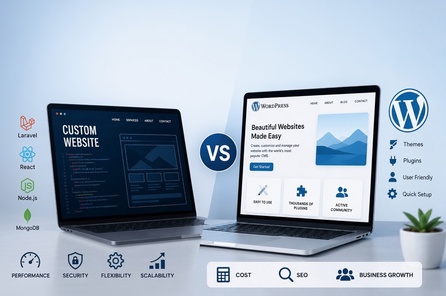
One of the first questions businesses ask before starting a new website project is, “Should I build a custom website or use WordPress?”
It’s a fair question and one that doesn’t have a universal answer. The right choice depends on your business goals, budget, long-term plans, and the functionality you need.
While WordPress powers millions of websites worldwide, custom web development offers unmatched flexibility for businesses with unique requirements. Both approaches have their strengths, and understanding the differences will help you make an informed investment rather than an expensive mistake.
In this guide, we we will compare custom websites and WordPress across cost, performance, security, scalability, SEO, and business suitability so you can determine which solution best fits your organization.
What Is a Custom Website?
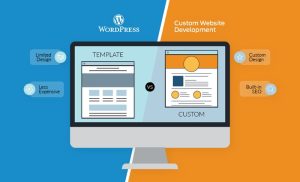
A custom website is built specifically around your business requirements rather than adapting your business to fit existing software.
Instead of relying on pre-built themes and plugins, developers create the website from the ground up using modern frameworks and technologies such as Laravel, React, Node.js, Vue.js, or ASP.NET. Every feature, workflow, and user experience is designed to match your exact needs.
Custom development allows complete control over:
- Design and branding
- User experience
- Database architecture
- Integrations with third-party systems
- Performance optimization
- Security implementation
- Business-specific functionality
Because everything is purpose-built, custom websites are ideal for businesses that need more than a standard marketing website.
Examples include:
- SaaS platforms
- Online marketplaces
- Membership portals
- Booking and reservation systems
- Internal business applications
- Customer dashboards
- Enterprise websites
What Is WordPress?
WordPress is the world’s most popular Content Management System (CMS), powering more than 40% of websites globally.
Its popularity comes from its ease of use, affordability, and enormous ecosystem of themes and plugins that allow businesses to launch websites quickly.
WordPress makes it easy to:
- Publish blog content
- Create service pages
- Build portfolios
- Manage media
- Add contact forms
- Install SEO tools
- Expand functionality with plugins
For businesses that primarily need a professional online presence and regular content updates, WordPress provides an excellent balance of flexibility and cost-effectiveness.
Cost Comparison
Cost is often the biggest deciding factor when choosing between custom development and WordPress.
WordPress
WordPress generally has a lower upfront cost because many features already exist through themes and plugins. Businesses can often launch quickly without extensive development.
However, ongoing expenses may include:
- Premium themes
- Plugin subscriptions
- Security plugins
- Backup services
- Hosting upgrades
- Developer support
Custom Website
Custom development requires a larger initial investment because every feature is designed and developed specifically for your business.
Although the upfront cost is higher, businesses often avoid:
- Multiple plugin subscriptions
- Compatibility issues
- Performance bottlenecks
- Rebuilding the website as they grow
In many cases, paying more initially can reduce long-term development costs by creating a scalable solution from day one.
Performance & Speed
Website speed directly impacts user experience, search rankings, and conversion rates.
Custom websites are built with only the code they actually need. This results in:
- Faster loading times
- Cleaner code
- Better Core Web Vitals
- Improved user experience
- Greater scalability
WordPress websites can also perform well, but excessive plugins, poorly coded themes, and unnecessary scripts often create slower websites.
A professionally optimized WordPress website can still achieve excellent performance—but it requires careful plugin management and ongoing optimization.
Security & Maintenance
Every website requires ongoing maintenance regardless of the platform.
WordPress Security
Because WordPress is so widely used, it is also a common target for attackers.
Most vulnerabilities come from:
- Outdated plugins
- Unsupported themes
- Weak passwords
- Poor hosting environments
Regular updates are essential to maintaining security.
Custom Website Security
A custom application has a significantly smaller attack surface because it doesn’t rely on thousands of publicly available plugins.
Security can be built directly into the application’s architecture, including:
- Role-based permissions
- API authentication
- Data encryption
- Custom validation
- Secure coding practices
Regardless of platform, routine maintenance, monitoring, and updates remain essential.

Which Businesses Should Choose Each?
WordPress Is a Great Choice For
- Blogs
- Small business websites
- Portfolio websites
- Marketing websites
- Businesses with limited budgets
- Companies needing frequent content updates
WordPress offers excellent value when your primary goal is publishing content and generating leads.
Custom Development Is Better For
- SaaS products
- Membership platforms
- Booking systems
- Internal business portals
- Businesses with custom workflows
- Companies expecting significant growth
- Businesses requiring advanced integrations
If your website is a core part of your operations rather than simply a marketing tool, custom development often delivers greater long-term value.
Do's
Choose a platform based on your long-term business goals.
Prioritize website speed and user experience.
Invest in ongoing maintenance and security.
Plan for future scalability before development begins.
Create high-quality, SEO-focused content regardless of platform.
Don'ts
Assume WordPress automatically ranks higher on Google.
Install unnecessary plugins that slow down your website.
Ignore regular security updates and maintenance.
Choose a platform solely based on upfront cost.
Overlook future business growth when planning your website.
Final Verdict: How Do You Decide?
Ask yourself these questions before choosing your platform:
- Do you need custom functionality that plugins cannot provide?
- Will your business grow significantly over the next few years?
- Is keeping upfront costs low your biggest priority?
- Will non-technical staff regularly update website content?
- Do you anticipate integrating multiple third-party systems?
If you mainly need a professional marketing website with manageable costs and easy content updates, WordPress is an excellent choice. If your website will become a central part of your business operations, support complex workflows, or require extensive customization, investing in a custom-built website can provide greater flexibility, security, and scalability over time.
Enhance your brand potential
If you’re ready to become the answer in AI-driven search, talk to us.